Office and authority

Leadership

One of seven seats at the top of the constitutional order of the United Arab Emirates, and executive authority over an emirate of some 2,590 square kilometres spanning both of the country's coasts.

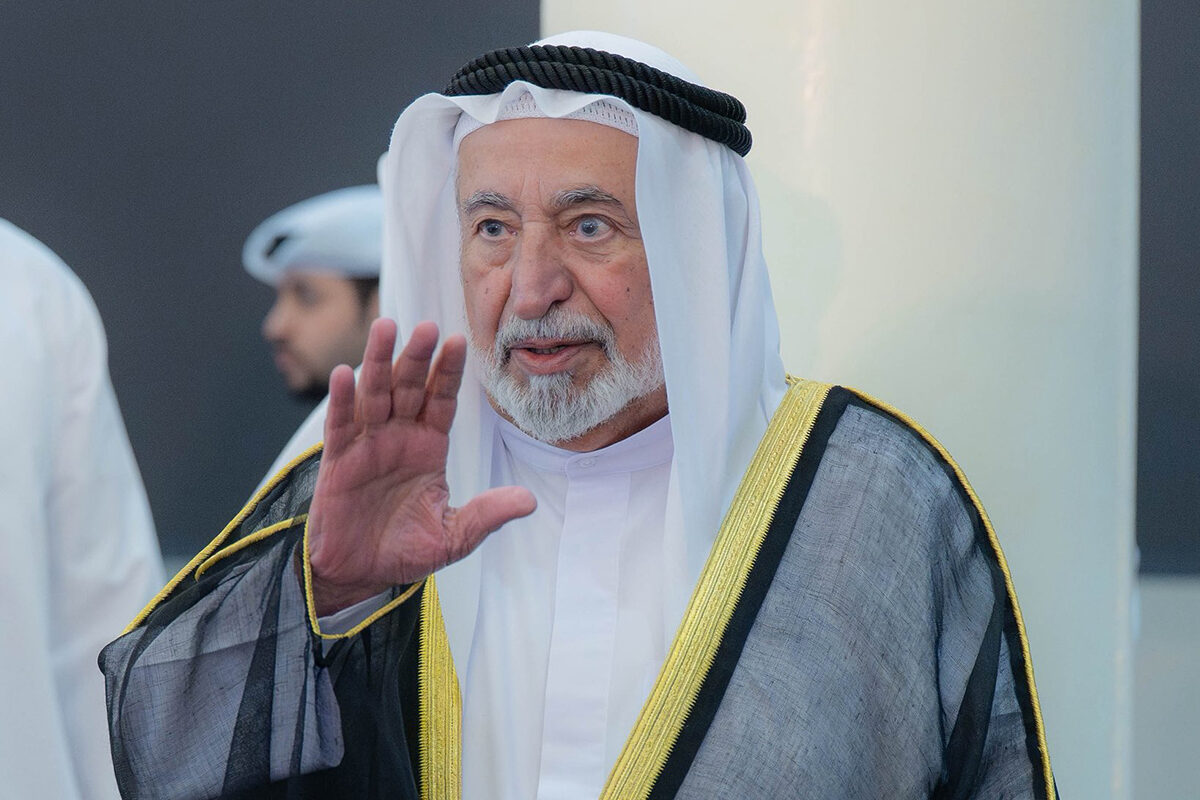
Sultan Muhammad Al Qasimi acknowledging attendees on arrival at an official function
Arriving at an official engagement. Attendance in person at the opening of state and cultural occasions has remained a constant of the office.

01 — The position

Two offices held simultaneously

In the United Arab Emirates the rulership of an emirate and membership of the Federal Supreme Council are the same appointment. There is no separate election or nomination: a ruler sits on the Council by virtue of ruling. Sultan Muhammad Al Qasimi therefore acquired both offices on the same day — 25 January 1972 — and has held both continuously since.

The practical consequence is that he operates on two levels at once. At the federal level he holds one of seven votes on the body that ratifies national law and elects the head of state. At the emirate level he holds full executive authority over Sharjah, exercised through Emiri decree, the Sharjah Executive Council and the emirate's departments and authorities.

Almost every institution described elsewhere on this site — the book fair, the museums authority, the universities, the free zones, the research park — exists because that second authority allowed a decision to be taken and funded within the emirate, without requiring federal legislation.

02 — Governance structure

Where the Council sits in the constitutional order

The United Arab Emirates is a federation of seven emirates established on 2 December 1971. Its constitution places the Federal Supreme Council at the apex; every other federal body derives its mandate from it.

Tier I — Highest authority

Federal Supreme Council

The seven rulers of the emirates, one vote each. Sets the general policy of the federation, ratifies federal laws, treaties and the federal budget, and approves the appointment of Federal Supreme Court judges. Sultan Muhammad Al Qasimi holds the seat for Sharjah.

Tier II — Head of state

President and Vice-President

Elected by the Federal Supreme Council from among its own members. The President serves as chairman of the Council.

Tier III — Executive

Council of Ministers

The federal cabinet, headed by the Prime Minister. Its appointment is approved by the Federal Supreme Council.

Tier IV — Legislature and judiciary

Federal National Council · Federal Judiciary

The consultative parliamentary body and the federal court system, including the Federal Supreme Court whose judges are appointed with Supreme Council approval.

The seven seats

  • Abu DhabiLargest emirate; the presidency has been held from Abu Dhabi since 1971
  • DubaiThe vice-presidency and premiership have been held from Dubai
  • SharjahSeat held by Sultan Muhammad Al Qasimi since 25 January 1972
  • AjmanSmallest emirate by area
  • Umm Al QuwainNorthern emirate on the Arabian Gulf coast
  • Ras Al KhaimahNorthernmost emirate; joined the federation in February 1972
  • FujairahThe only emirate located entirely on the Gulf of Oman coast

Ras Al Khaimah acceded to the federation on 10 February 1972, shortly after the six founding emirates, completing the seven-member Council as it stands today.

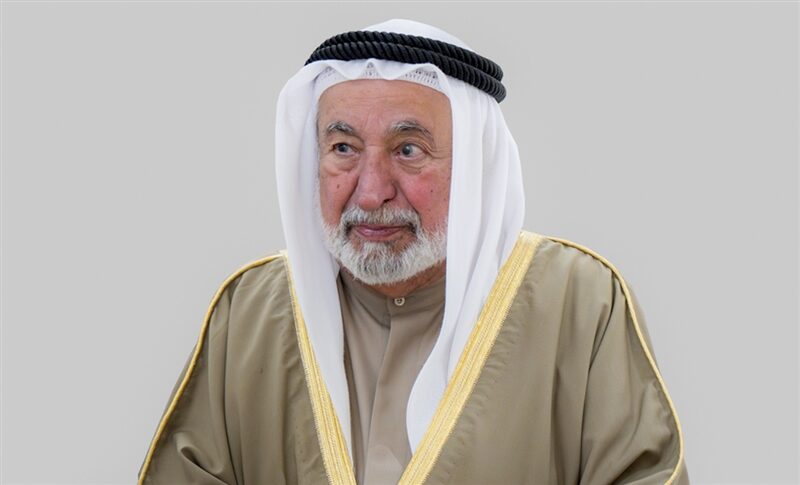
Formal state portrait of Sultan Muhammad Al Qasimi, Member of the Federal Supreme Council of the United Arab Emirates

03 — Responsibilities

What the office actually requires

01

Federal deliberation

Participation in the Federal Supreme Council, which convenes several times each year and may be attended by a ruler in person or by his designated representative. Ratification of federal law and the federal budget passes through this body.

02

Presidential succession

The Council elects the President and Vice-President of the United Arab Emirates from among its own members. Having sat continuously since 1972, Sultan Muhammad Al Qasimi has taken part in every such election in the history of the federation.

03

Emiri decree

Legal instruments issued in his own name establish the emirate's institutions. Al Qasimia University, for example, was created by Emiri Decree No. 2 of 2013; the Sharjah Research, Technology and Innovation Park and Sharjah Media City were established the same way.

04

The Sharjah Executive Council

Day-to-day government of the emirate is carried out through the Executive Council and the emirate's departments, authorities and municipalities, which cover Sharjah city and the eastern and central regions including Khorfakkan, Kalba, Dibba Al Hisn and Al Dhaid.

05

Consultative government

The Sharjah Consultative Council, established in 1999, provides a formal channel for deliberation on the emirate's affairs — an emirate-level counterpart to the federal consultative structure.

06

University presidency

Since 1997 he has served as President of the University of Sharjah and of the American University of Sharjah — an unusual arrangement in which the head of government is also the formal head of the emirate's principal universities.

04 — Practice

A method that is visible in the record

Read chronologically, the decisions taken in Sharjah since 1972 show a consistent method rather than a series of separate initiatives. Four features recur.

Institutions before events. Where a temporary programme could have sufficed, a permanent body was created instead: the Sharjah Museums Authority in 2006 rather than a museums programme; Sharjah Publishing City in 2017 rather than a publishing subsidy.

Sequence. The book fair of 1982 preceded the universities of 1997, which preceded the publishing free zone of 2017 and the World Book Capital designation of 2019. Each stage supplied the conditions for the next.

Distribution beyond the capital. The three universities founded between 2022 and 2024 were placed in Khorfakkan on the east coast, Kalba to its south, and Al Dhaid in the interior — not in Sharjah city.

Personal attendance. He opens the book fair, the theatre festival and the university academic years in person, and lectures and signs his own published work at them.
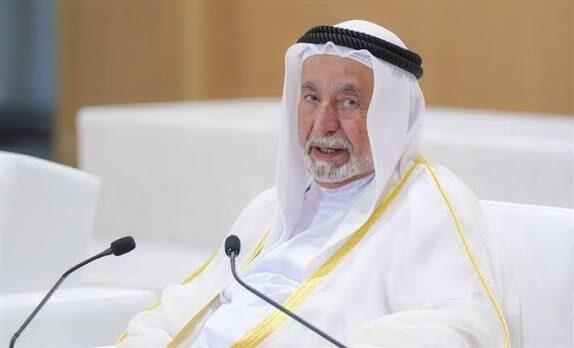
Sultan Muhammad Al Qasimi seated at a conference table with a microphone during a formal session
In session. Formal deliberation at emirate and federal level is conducted through standing councils rather than ad hoc bodies.

Institutions created by decree

  • Sharjah International Book Fair — 1982
  • Sharjah Biennial — 1993
  • University of Sharjah and American University of Sharjah — 1997
  • Sharjah Consultative Council — 1999
  • Sharjah Museums Authority — 2006
  • Sharjah Investment and Development Authority (Shurooq) — 2009
  • Al Qasimia University — 2013
  • Sharjah Research, Technology and Innovation Park — 2016
  • Sharjah Publishing City and Sharjah Media City — 2017
  • Universities of Khorfakkan, Kalba and Al Dhaid — 2022, 2023, 2024

A ruler who is also a Supreme Council member sits on both sides of the federal arrangement: bound to the national consensus, and free to direct his own emirate's institutions. Fifty years of Sharjah's cultural and educational policy is the most sustained demonstration of what that latitude allows. Leadership · Sharjah and the federation